
Thicker structural plates
A thicker shell supports heavier digging in hard soil and slightly rocky ground.
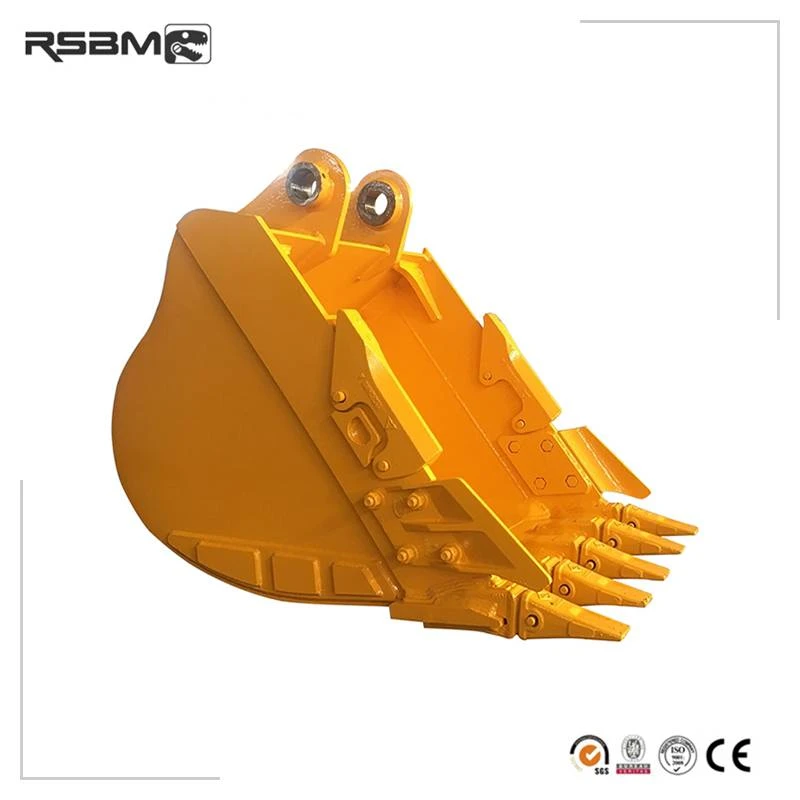
A reinforced digging bucket for hard soil, gravel and slightly rocky ground. Bottom reinforcement and side protection support excavation and loading in demanding earthwork conditions.
Demanding earthworkA heavy-duty digging bucket uses thicker plates and additional protection compared with a general-purpose bucket. Its reinforced bottom and protected sides suit harder soil and ground containing smaller stones. For substantial rock content or severe abrasion, compare the rock and heavy-duty rock bucket types.
A thicker shell supports heavier digging in hard soil and slightly rocky ground.
Additional bottom plates strengthen a high-contact area during excavation and loading.
Protective plates and side cutters shield the sides from contact with abrasive material.
Teeth and adapters support penetration and loading in mixed soil and relatively soft stone.
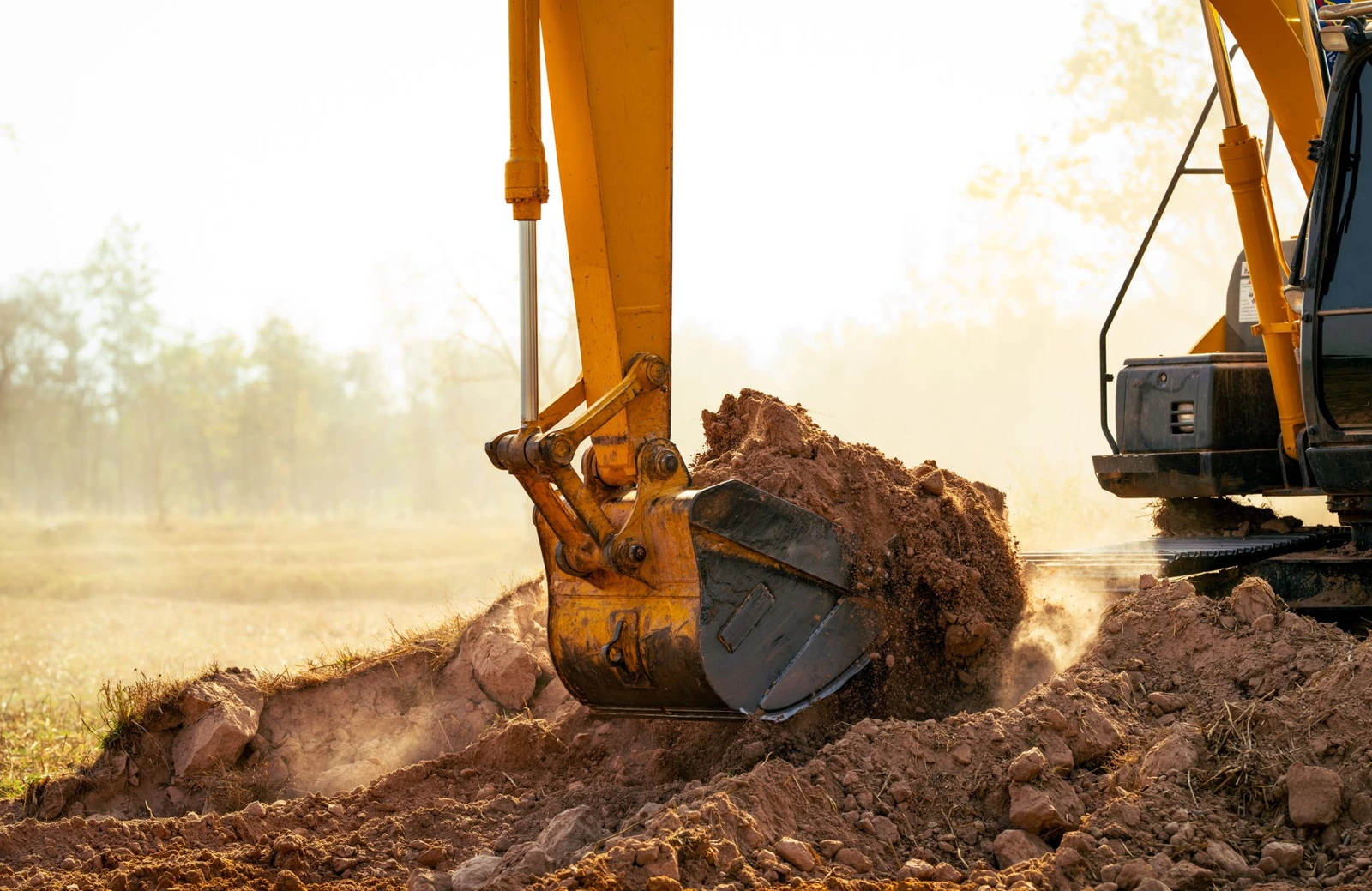
Published series ranges for capacity, bucket weight and excavator size. Select the required width, capacity and mounting arrangement together.
On a narrow screen, swipe the table to view every specification.
| Series | Capacity range | Attachment weight range | Excavator operating weight |
|---|---|---|---|
| JY-HD | 0.01–12 m³ | 50–10,000 kg | 5–100 t |
Published configurations for capacity, steel grade and bucket weight. Confirm the mounting drawing for the selected machine.
19 configurations
| Model | Reference machine | Capacity (m³) | Material | Bucket weight (kg) |
|---|---|---|---|---|
| JY-HD-01 | CAT 305.5D | 0.19 | Q345B | 198 |
| JY-HD-02 | CAT 307C | 0.31 | Q345B | 244 |
| JY-HD-03 | CAT 320D | 1 | Q345B+NM400 | 865 |
| JY-HD-04 | CAT 320D | 1.1 | Q345B+NM400 | 1010 |
| JY-HD-05 | CAT 320D | 1.19 | Q345B+NM400 | 966 |
| JY-HD-06 | CAT 325D | 1.35 | Q345B+NM400 | 1320 |
| JY-HD-07 | CAT 325D | 1.57 | Q345B+NM400 | 1352 |
| JY-HD-08 | CAT 330D | 1.64 | Q345B+NM400 | 1818 |
| JY-HD-09 | CAT 330D | 1.87 | Q345B+NM400 | 2043 |
| JY-HD-10 | Volvo EC55B | 0.2 | Q345B | 228 |
| JY-HD-11 | Volvo EC60C | 0.25 | Q345B | 291 |
| JY-HD-12 | Volvo EC210B | 0.92 | Q345B | 890 |
| JY-HD-13 | Volvo EC240B | 1.1 | Q345B+NM400 | 1070 |
| JY-HD-14 | Komatsu PC110 | 0.48 | Q345B | 450 |
| JY-HD-15 | Komatsu PC200 | 0.8 | Q345B | 890 |
| JY-HD-16 | Komatsu PC210 | 1 | Q345B+NM400 | 980 |
| JY-HD-17 | Komatsu PC240 | 1.2 | Q345B+NM400 | 1250 |
| JY-HD-18 | Hitachi ZX200 | 0.91 | Q345B | 910 |
| JY-HD-19 | JCB JCB360 | 1.9 | Q345B+NM400 | 1980 |
Capacity and weight are paired values for each configuration. The original catalogue does not list pin dimensions or bucket width for these rows.
State the required bucket width and capacity. Check attachment weight, material density and the excavator's operating limits together.
Before ordering, send your excavator make, model and operating weight, plus mounting measurements or a clear interface drawing.
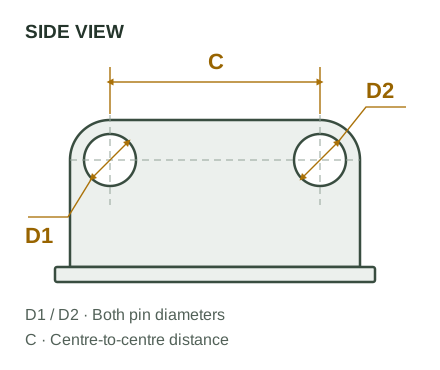
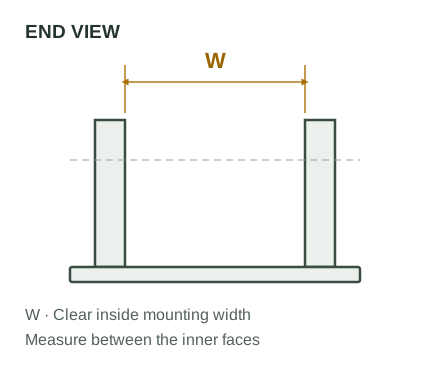
Machine identification — excavator make, model and operating weight.
Pin dimensions — measure both pin diameters and the centre-to-centre distance in millimetres.
Mounting interface — inside width between mounting ears; pin-on or quick-coupler connection.
Working clearance — check bucket width, capacity and clearance throughout the operating movement.
This fixed digging bucket has no separate powered mechanism. It connects through the specified pin-on or quick-coupler interface.
Using a quick coupler? Include its make, model and interface drawing. Confirm dimensions against the actual machine and attachment drawing.
Answers about bucket duty, sizing and installation.
The terms can overlap between manufacturers. Compare the actual shell design, wear protection and intended material rather than relying on the label alone.
No. Attachment weight, material density, capacity and machine limits must be considered together. Additional reinforcement also adds weight.
Match the required width or capacity to the work area, material and excavator limits. Check attachment weight and operating clearance alongside the dimensions.
Include the machine make and model, both pin diameters, pin centre distance and clear inside mounting width, or the specified quick-coupler interface drawing.
Send the coupler make, model and interface drawing with the excavator details. The bucket connection must match that specific coupler interface; machine weight alone does not establish a fit.
Wear strips, wear blocks and wear angles are listed for this range. Describe the material and abrasion conditions so the protection layout can be reviewed together with bucket weight and working clearance.
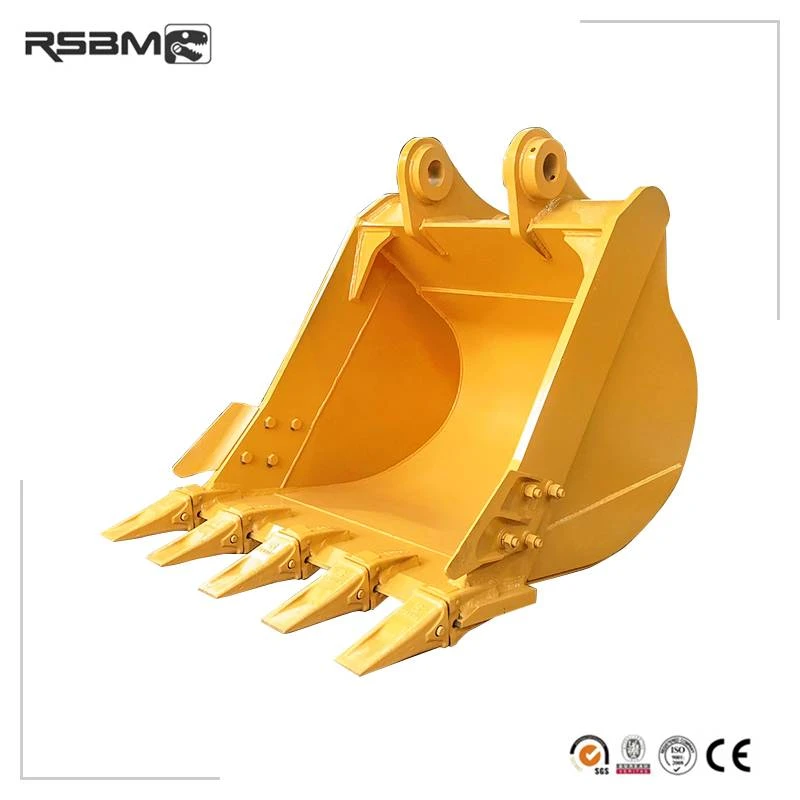
A toothed digging bucket for soil, sand and loose material, used for foundation excavation, routine loading and backfilling.
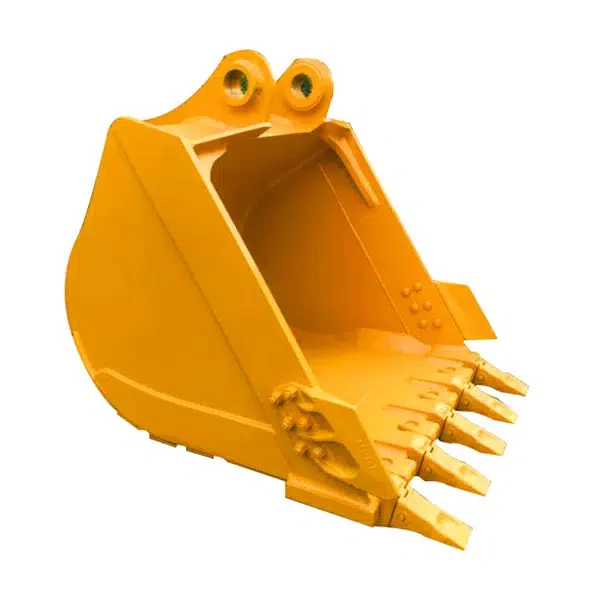
A reinforced bucket for rock, rubble and abrasive ground, used for excavation and material loading in rocky conditions.
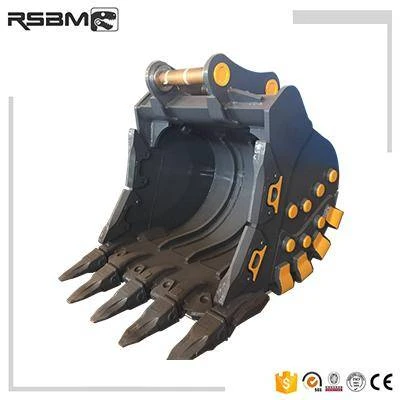
A rock bucket with additional wear protection, used for excavation and loading in abrasive quarry conditions.