

Reversible roller motion
Hydraulic power turns the rollers forward and in reverse to work material inside the bucket.
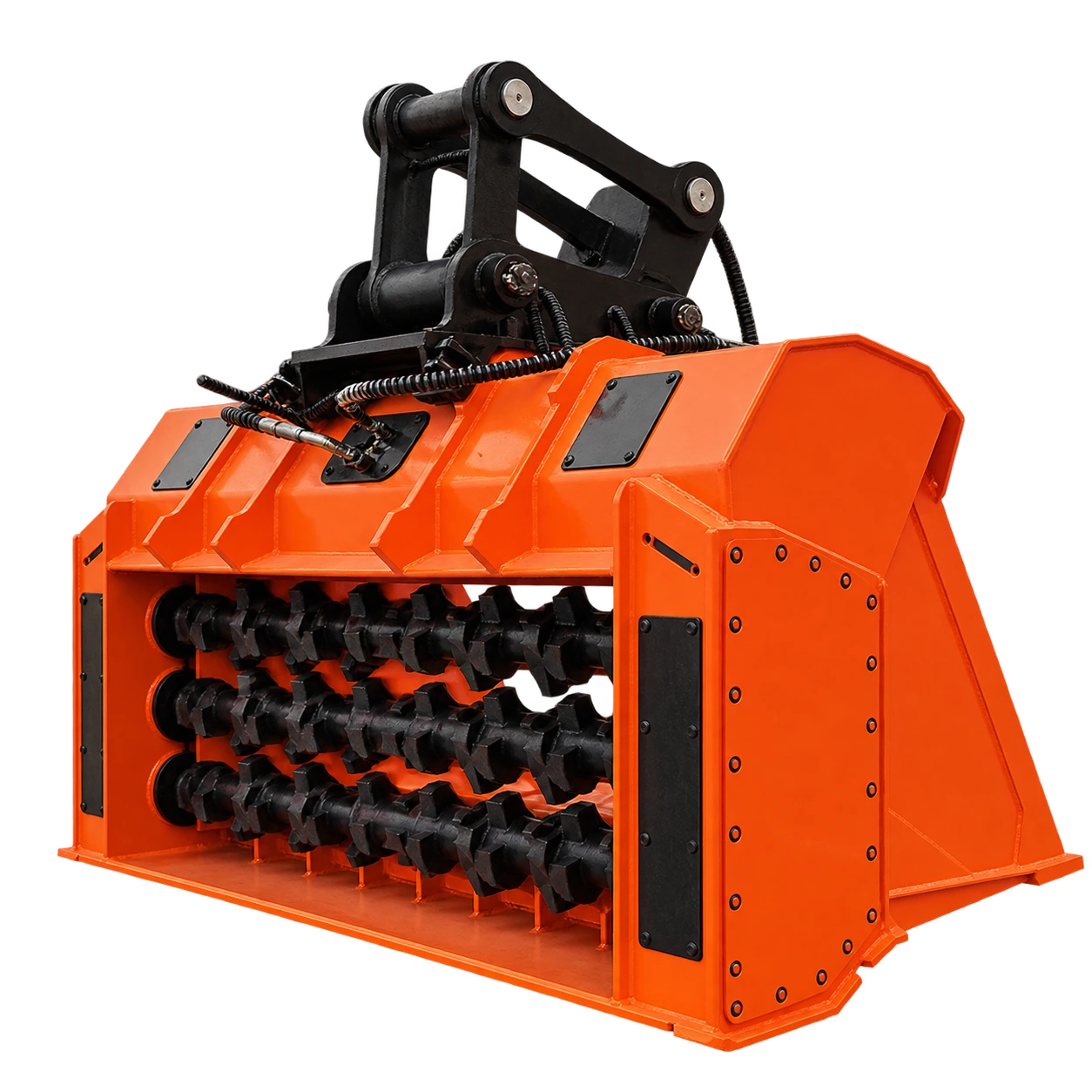
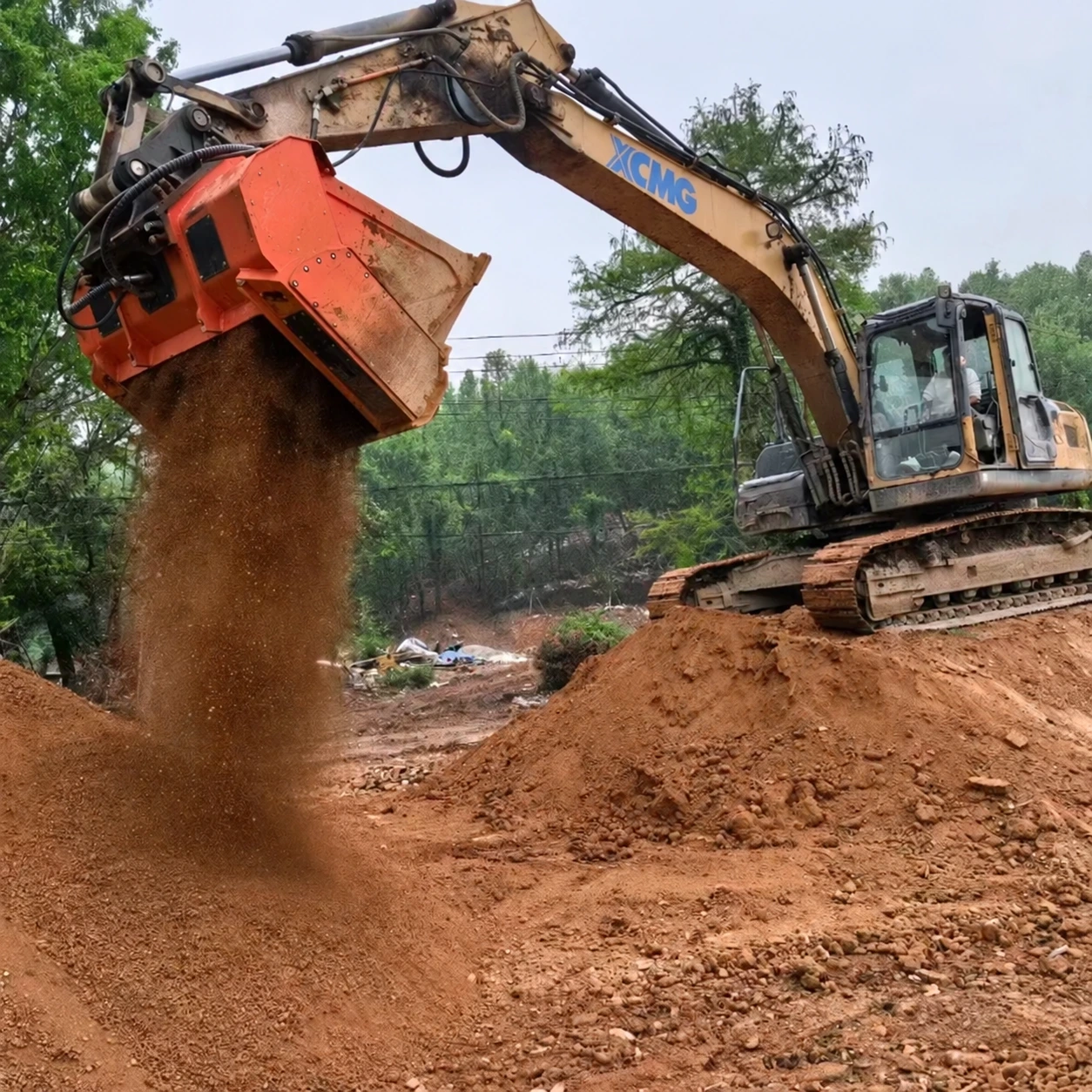
A hydraulically powered shaft screening bucket for processing soil and separating suitable material by size. Rotating rollers screen and mix material inside the bucket; this mechanism differs from a rotating screening drum.
A hydraulically powered shaft screening bucket for processing soil and separating suitable material by size. Rotating rollers screen and mix material inside the bucket; this mechanism differs from a rotating screening drum.
Hydraulic power turns the rollers forward and in reverse to work material inside the bucket.
The shaft arrangement separates eligible material while mixing and stirring the bucket contents.
Carbide inlays protect the screening cutters against wear during material processing.
High-strength, wear-resistant steel supports the bucket structure during screening and mixing.
The drive and valve block power the roller mechanism; compare the stated flow for each model.

|
Model |
Applicable Excavator(MT) |
Applicable Loader(MT) |
Bucket Capacity(m³) |
Hydraulic Flow(L/min) |
Product Size(cm) |
Weight(kg) |
| JY-MT312 |
18-25 |
9-14 |
1.2 |
120-200 |
190*150*160 |
2010 |
| JY-MT317 |
25-30 |
12-22 |
1.7 |
150-220 |
240*150*160 |
2640 |
| JY-MT320 |
30-45 |
14-30 |
2 |
200-320 |
270*150*160 |
3050 |
Before ordering, send the machine identification and the connection, power and working information relevant to this product.
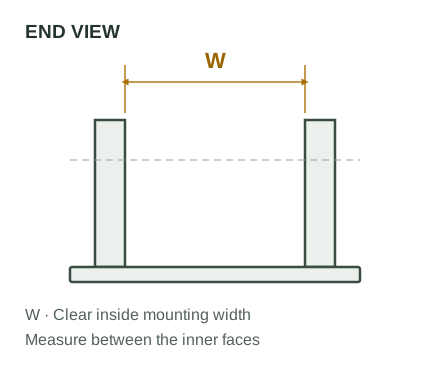
Match 18–25, 25–30 or 30–45 t and the listed attachment weight, then check the machine’s lifting geometry.
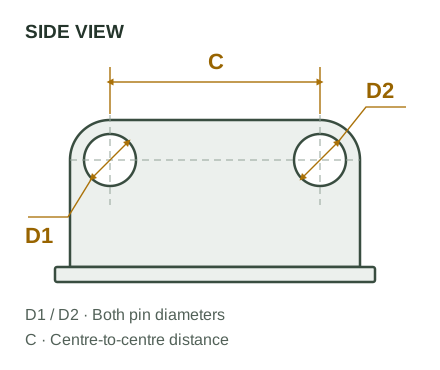
Provide pin diameters, centres, clear mounting width or quick-coupler information.
Compare the selected 120–200, 150–220 or 200–320 L/min range and controls for reversible shaft motion. The web table does not state operating pressure.
Specify feed material, moisture, contamination and the required fraction; choose the actual shaft and opening rather than inferring them from capacity.
No. This bucket uses working shafts and rollers; a rotary screening bucket turns a mesh drum.
No. It describes bucket volume. Output depends on material, moisture, shaft arrangement and operating conditions.
The specification table does not provide pressure. Check the specified motor, controls and return arrangement before installation.
No. Choose the actual shaft and opening for the material and required result; coarse-screen and fine-screen configurations differ.
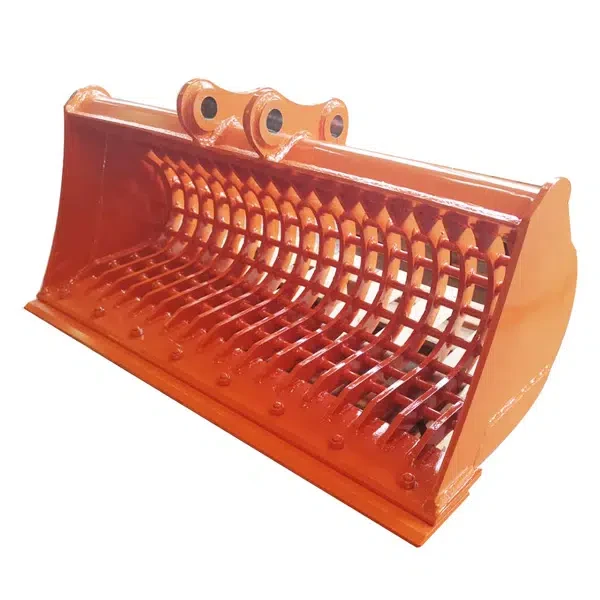
An open-grid bucket that lets finer material pass through while retaining larger objects. It provides passive separation and is different from a hydraulically driven rotary screening bucket.
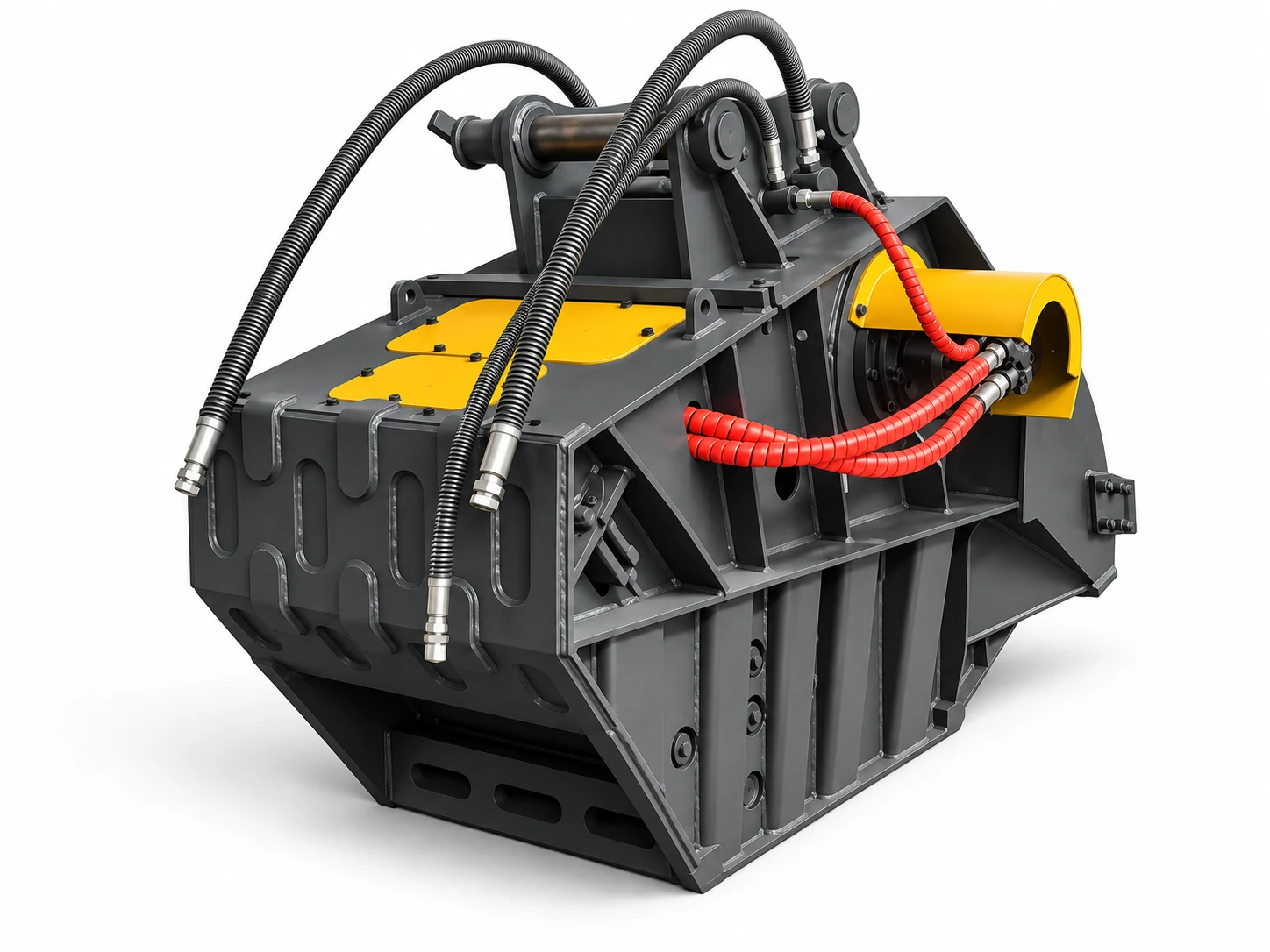
An excavator-mounted hydraulic bucket for crushing suitable concrete, stone and construction material on site. Compare feed opening, adjustable discharge size and hydraulic demand before choosing a configuration.
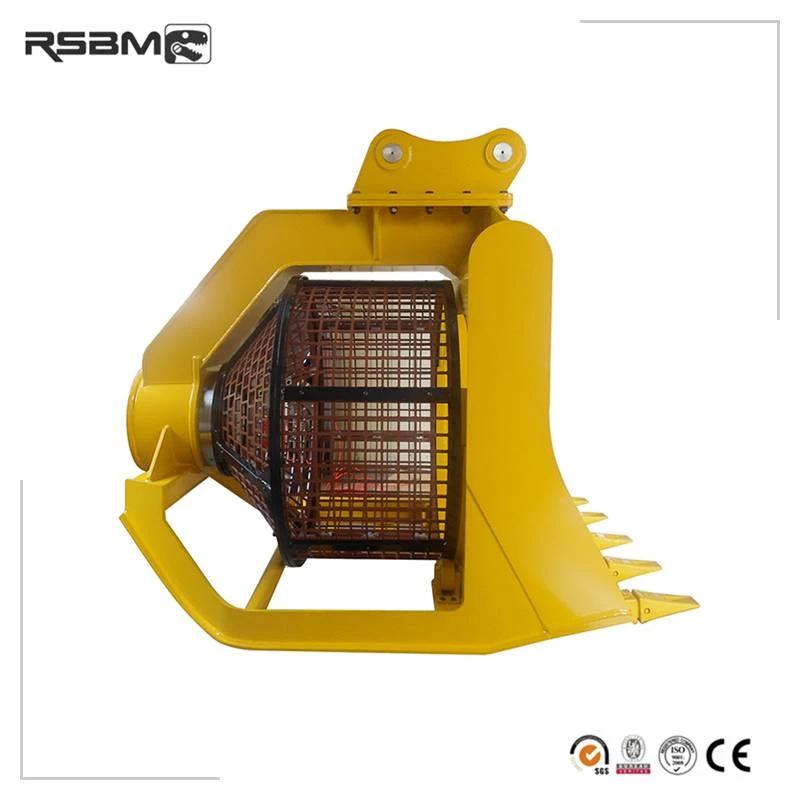
A hydraulically driven drum bucket for screening suitable loose soil, aggregate and recycling material. Choose the drum openings and hydraulic supply for the intended separation task.