
Open-grid construction
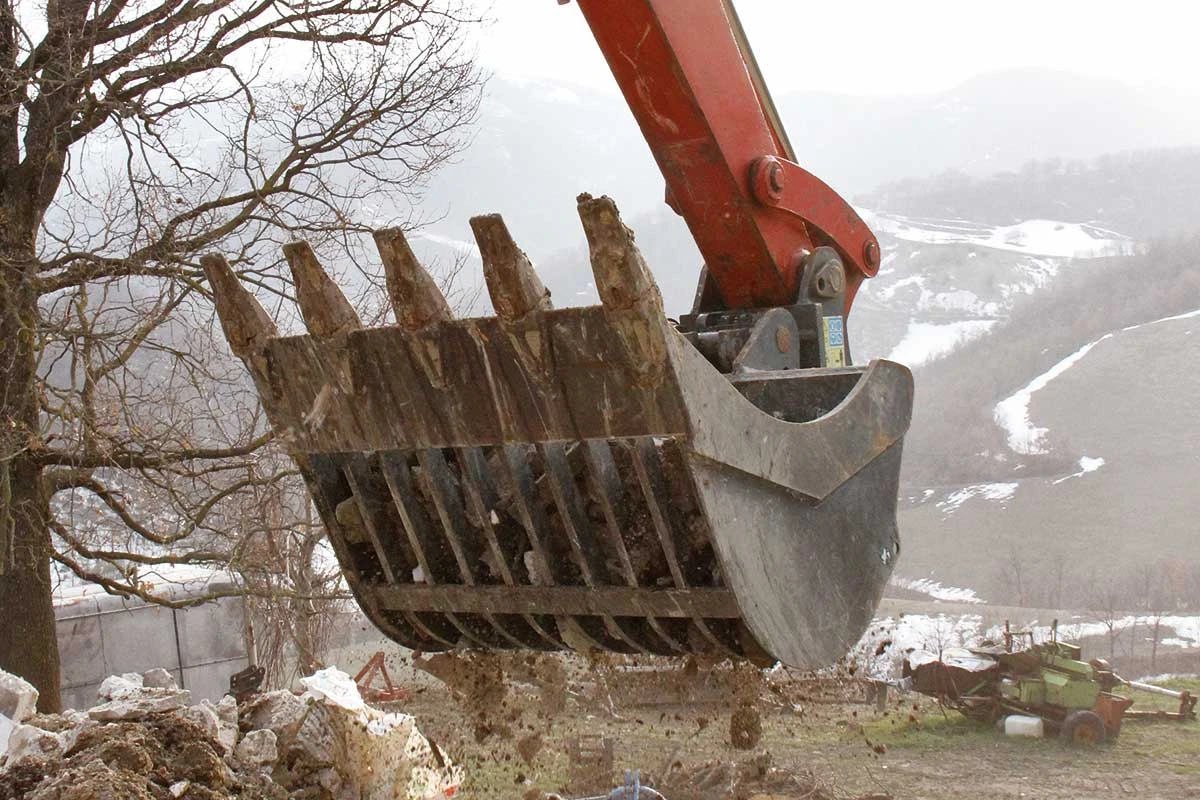
Gaps in the bucket let fine material fall through while retaining larger pieces.
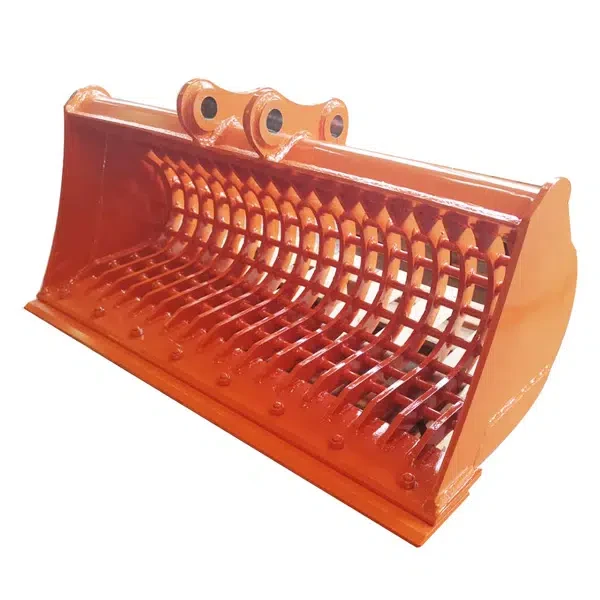
An open-grid bucket that lets finer material pass through while retaining larger objects. It provides passive separation and is different from a hydraulically driven rotary screening bucket.
Stone & soil separationAn open-grid bucket that lets finer material pass through while retaining larger objects. It provides passive separation and is different from a hydraulically driven rotary screening bucket.
Gaps in the bucket let fine material fall through while retaining larger pieces.
The bucket combines pickup and loading with separation of suitable loose soil and stone.
The open structure makes retained stones and debris visible during handling.
Compare the specification rows and include your required model or dimensions in the product enquiry below.
Scroll the table horizontally to view every specification →
| Model | Excavator weight class | Pin Diameter | Main Cutting Thickness | Bucket Width | Grid plate width | Round steel diameter | Spacing | Weight |
|---|---|---|---|---|---|---|---|---|
| JY-RS20 | 20 ton | 80 mm | 40 mm | 1050 mm | 25 mm | 23 mm | 90*90 mm | 920 kg |
Send your excavator make, model and operating weight, together with clear photos or a drawing of the mounting interface.
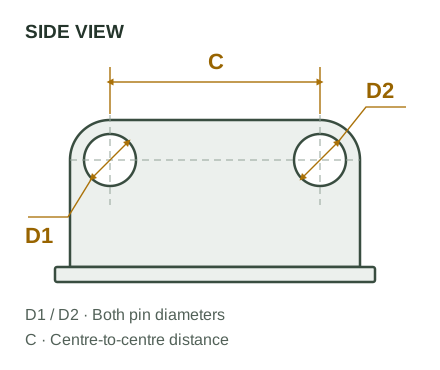
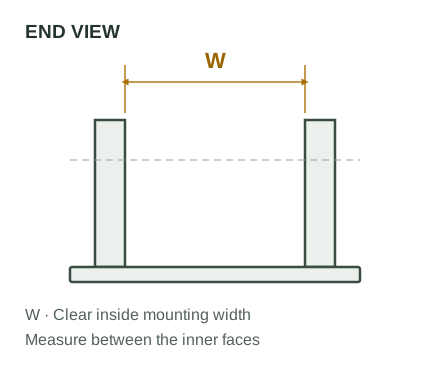
Machine identification — excavator make, model and operating weight.
Pin dimensions — measure both pin diameters and the centre-to-centre distance in millimetres.
Mounting interface — inside width between mounting ears; pin-on or quick-coupler connection.
Working clearance — check bucket width, capacity and clearance throughout the operating movement.
Using a quick coupler? Include its make, model and interface drawing. Confirm dimensions against the actual machine and attachment drawing.
No. A skeleton bucket has a passive open grid. A rotary screening bucket uses a driven screening mechanism and needs a different hydraulic and application review.
Describe the sizes to retain and to remove, material shape, moisture and contamination. Spacing alone does not guarantee a precise screened output.
Match the required width or capacity to the work area, material and excavator limits. Check attachment weight and operating clearance alongside the dimensions.
Include the machine make and model, both pin diameters, pin centre distance and clear inside mounting width, or the specified quick-coupler interface drawing.
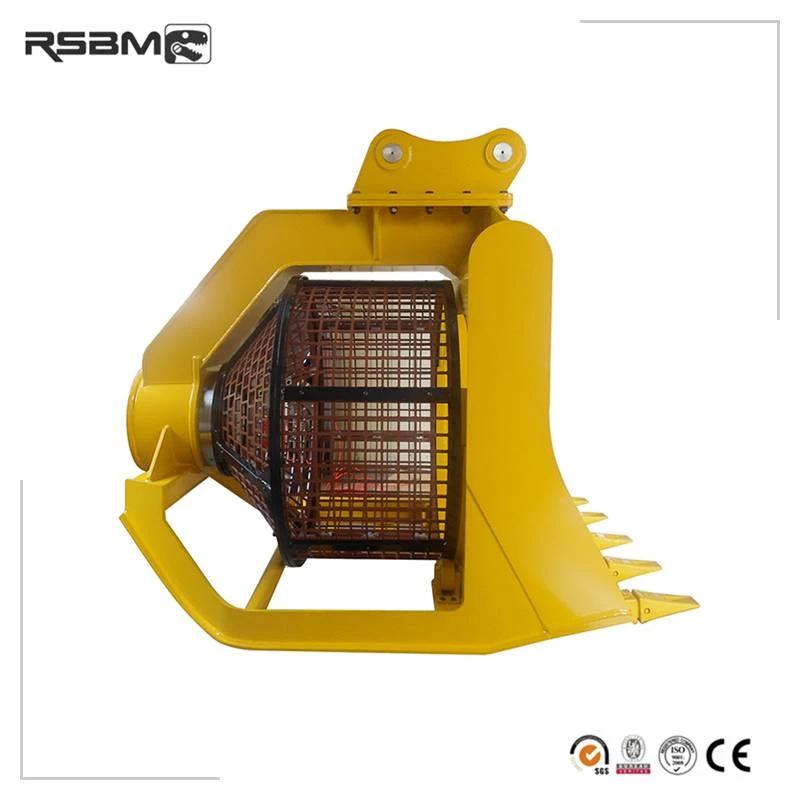
A hydraulically driven drum bucket for screening suitable soil, aggregate and recyclable material on site.
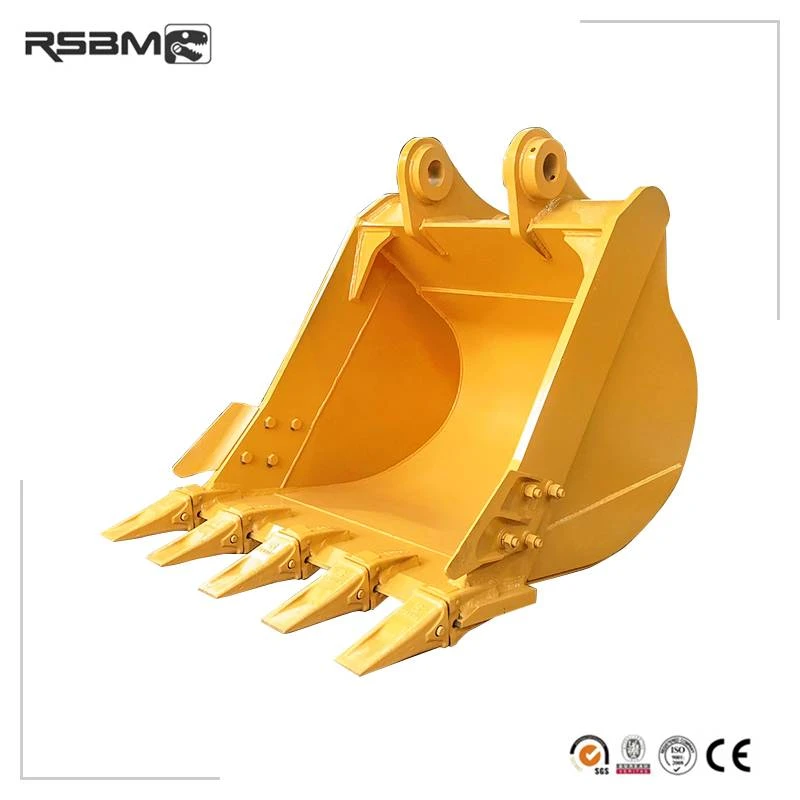
A toothed digging bucket for soil, sand and loose material, used for foundation excavation, routine loading and backfilling.
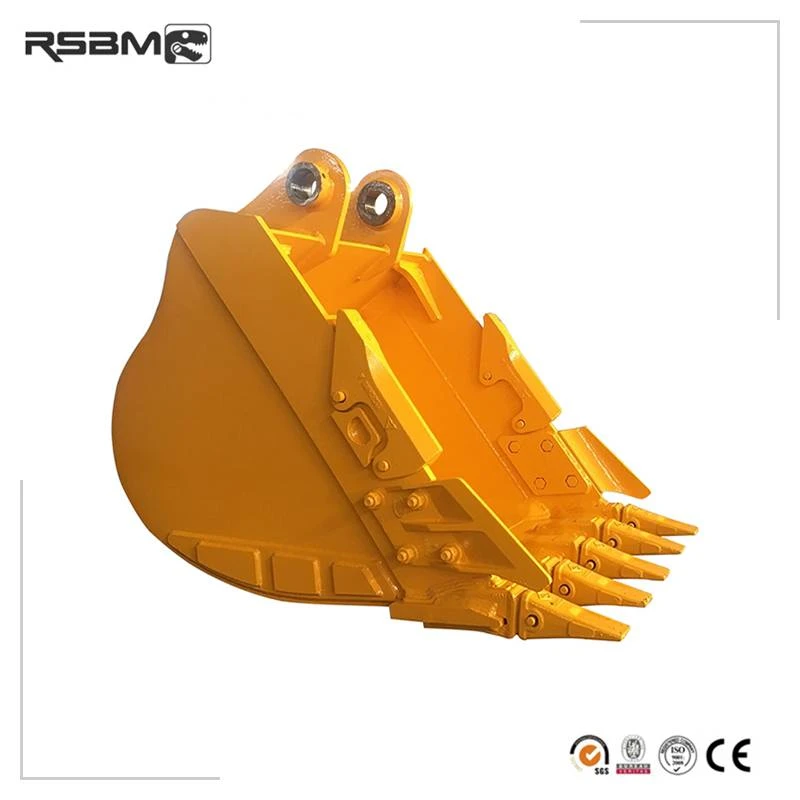
A reinforced digging bucket for compact ground, gravel and mixed material, used for demanding earthwork and loading.