

Hydraulic rotary cutting
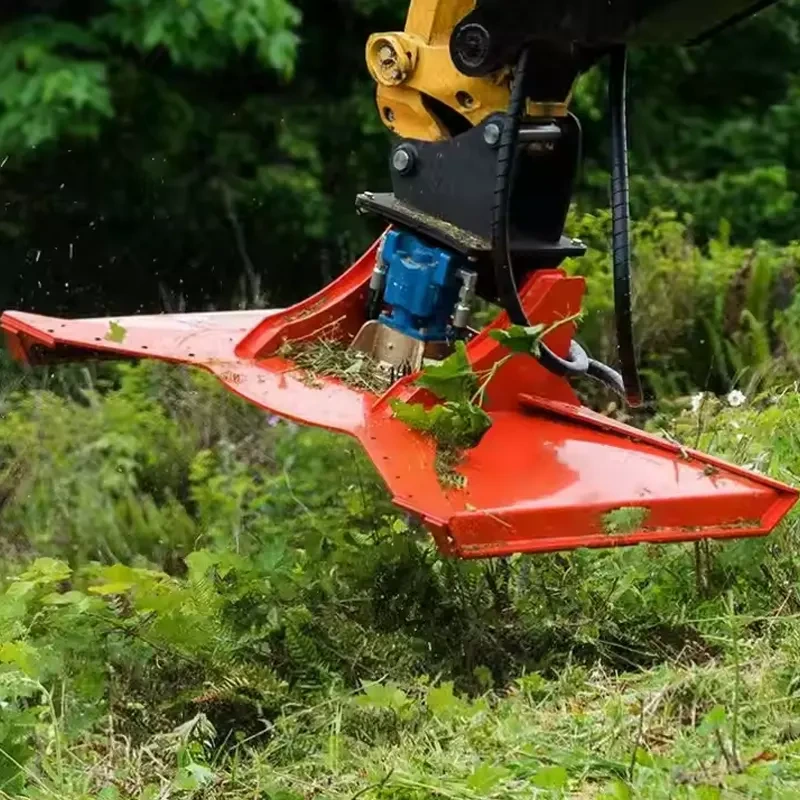
A motor turns the blade assembly inside the deck to cut vegetation.
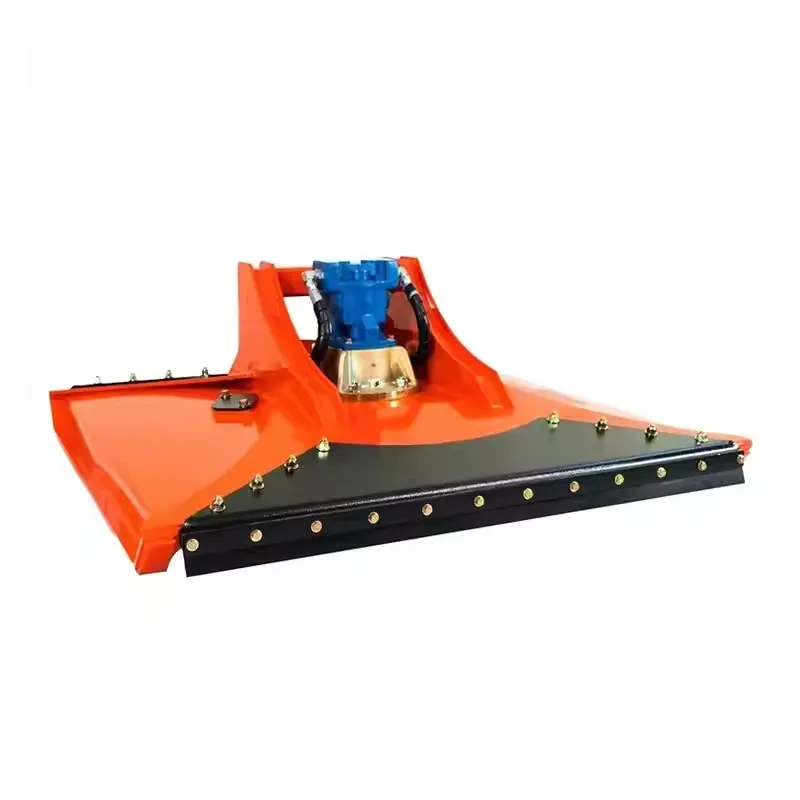
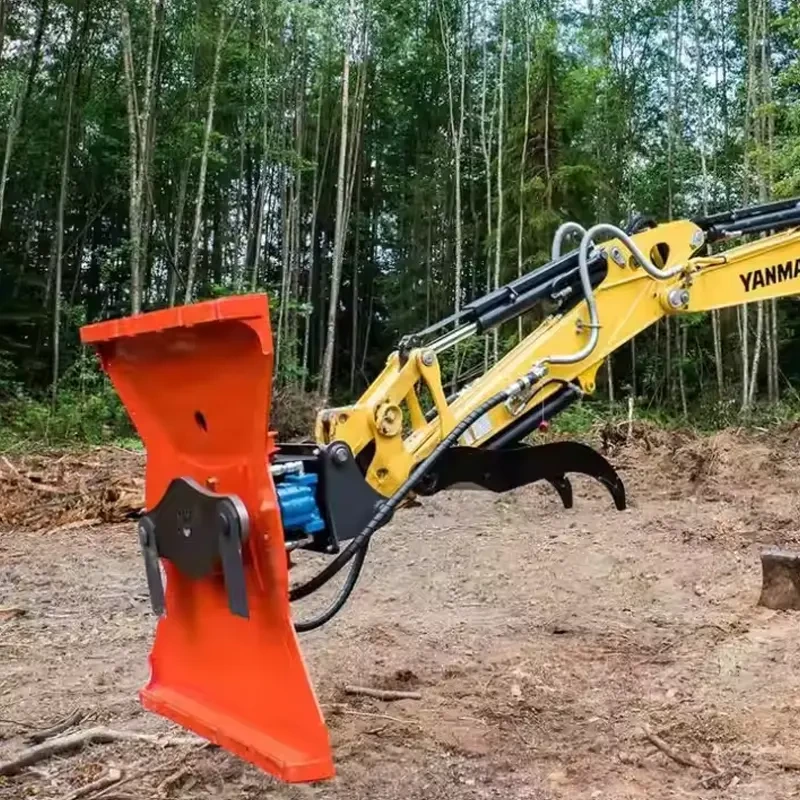
An excavator-mounted cutting deck with a hydraulic rotary blade assembly for brush, saplings and suitable woody vegetation. Standard-flow and high-flow versions are selected for the carrier’s auxiliary circuit.
An excavator-mounted cutting deck with a hydraulic rotary blade assembly for brush, saplings and suitable woody vegetation. Standard-flow and high-flow versions are selected for the carrier’s auxiliary circuit.
A motor turns the blade assembly inside the deck to cut vegetation.
The deck protects the drive and blade assembly during brush-clearing work.
S and H variants have distinct flow requirements within each cutting-width group.
| Model | Excavator Class | Hydraulic Flow | Cutting Width | Max Brush Diameter | Weight | Dimensions (L×W×H) |
|---|---|---|---|---|---|---|
| JY-TG-BC40-S | 3–6 t (3.3–6.6 ton) | 49–72 L/min (13–19 gpm) | 1016 mm (40 in) | 102 mm (4 in) | 299 kg (660 lb) | 1194×1321×559 mm (47×52×22 in) |
| JY-TG-BC40-H | 3–6 t (3.3–6.6 ton) | 72–98 L/min (19–26 gpm) | 1016 mm (40 in) | 102 mm (4 in) | 299 kg (660 lb) | 1194×1321×559 mm (47×52×22 in) |
| JY-TG-BC50-S | 5–8 t (5.5–8.8 ton) | 64–83 L/min (17–22 gpm) | 1270 mm (50 in) | 127 mm (5 in) | 476 kg (1050 lb) | 1448×1600×610 mm (57×63×24 in) |
| JY-TG-BC50-H | 5–8 t (5.5–8.8 ton) | 83–129 L/min (22–34 gpm) | 1270 mm (50 in) | 127 mm (5 in) | 476 kg (1050 lb) | 1448×1600×610 mm (57×63×24 in) |
| JY-TG-BC60-S | 7–10 t (7.7–11 ton) | 76–106 L/min (20–28 gpm) | 1524 mm (60 in) | 152 mm (6 in) | 562 kg (1240 lb) | 1702×1854×660 mm (67×73×26 in) |
| JY-TG-BC60-H | 7–10 t (7.7–11 ton) | 106–132 L/min (28–35 gpm) | 1524 mm (60 in) | 152 mm (6 in) | 562 kg (1240 lb) | 1702×1854×660 mm (67×73×26 in) |
Before ordering, send the machine identification and the connection, power and working information relevant to this product.
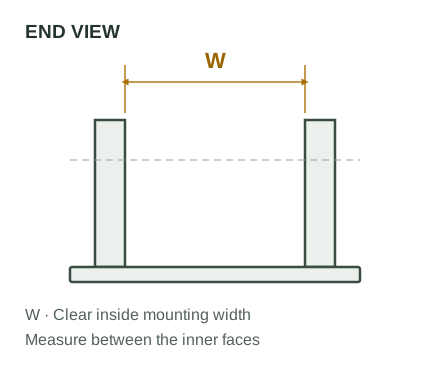
Match the machine class, selected deck weight and lifting capacity at the working radius.
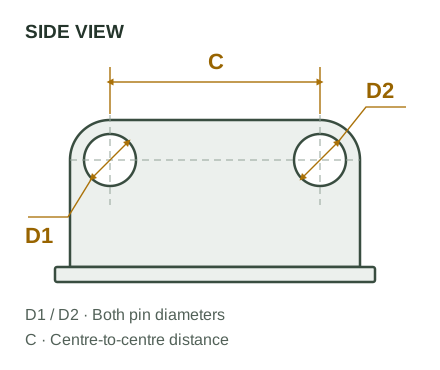
Confirm pins, centres, clear mounting width and any quick-coupler connection.
Compare the exact model flow range; confirm pressure, return and motor drain with the selected motor.
Identify obstacles and services, route hoses clear of the deck, and maintain the specified debris exclusion area.
They distinguish standard-flow and high-flow configurations in the reference model table.
No. The table gives different maximum brush diameters for the three size groups.
No. This attachment uses a rotary blade deck, rather than cutters around a horizontal drum.
The same deck width can have different drive requirements. Match the complete model, not just its width.
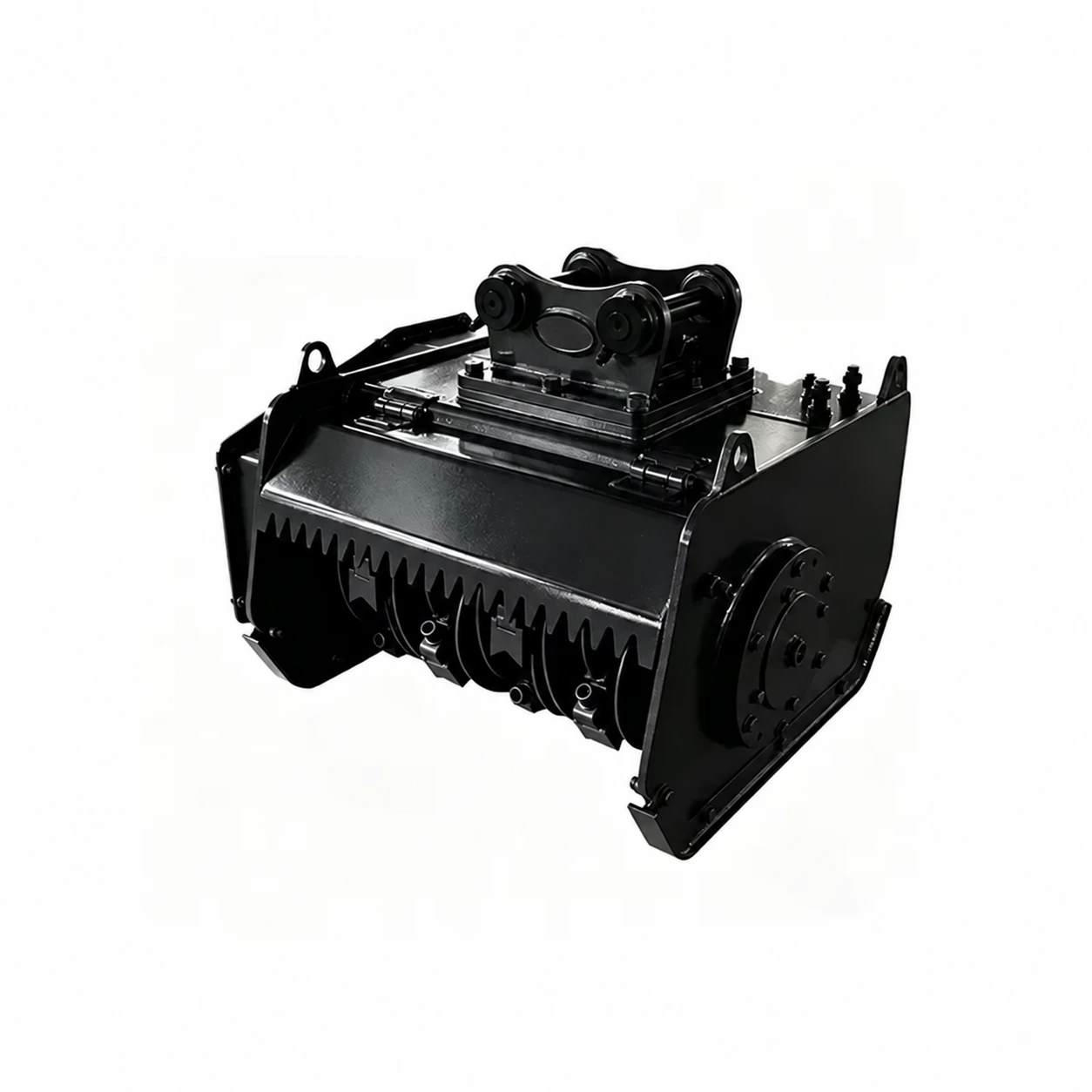
A hydraulic drum attachment for reducing brush, woody debris and fallen vegetation into smaller material. Fixed cutters work around a horizontal rotor; model selection depends on the excavator and its continuous hydraulic supply.
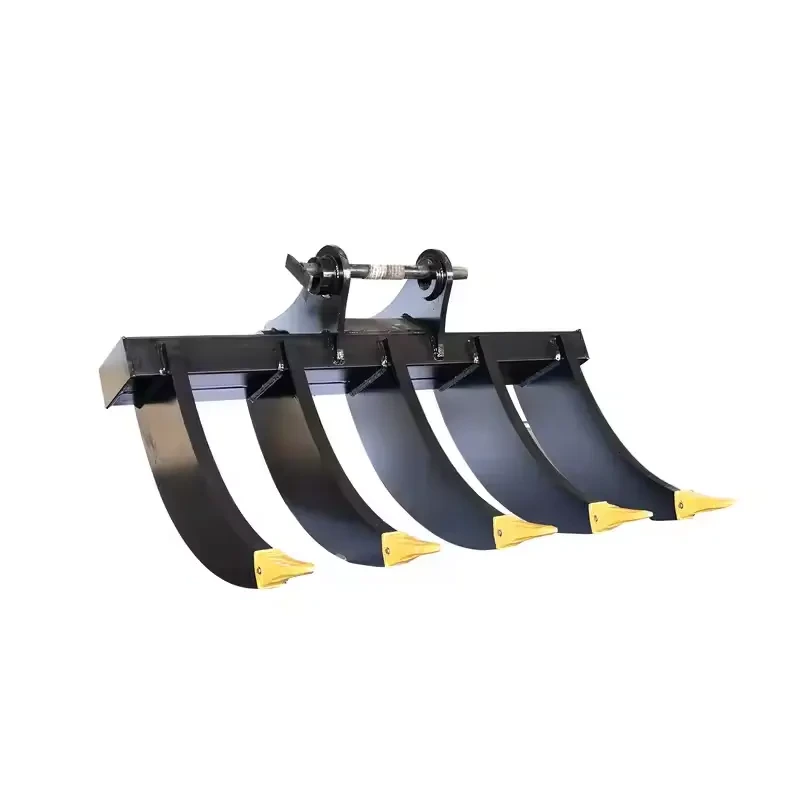
An open-tine excavator attachment for gathering roots, brush, rocks and site debris. Soil and smaller loose material can pass between the tines while larger material is gathered.