
Working material
Identify rock, concrete and the size of the sections to be broken.
Compare the working mechanism, intended material and machine connection for breaking, demolition & cutting.
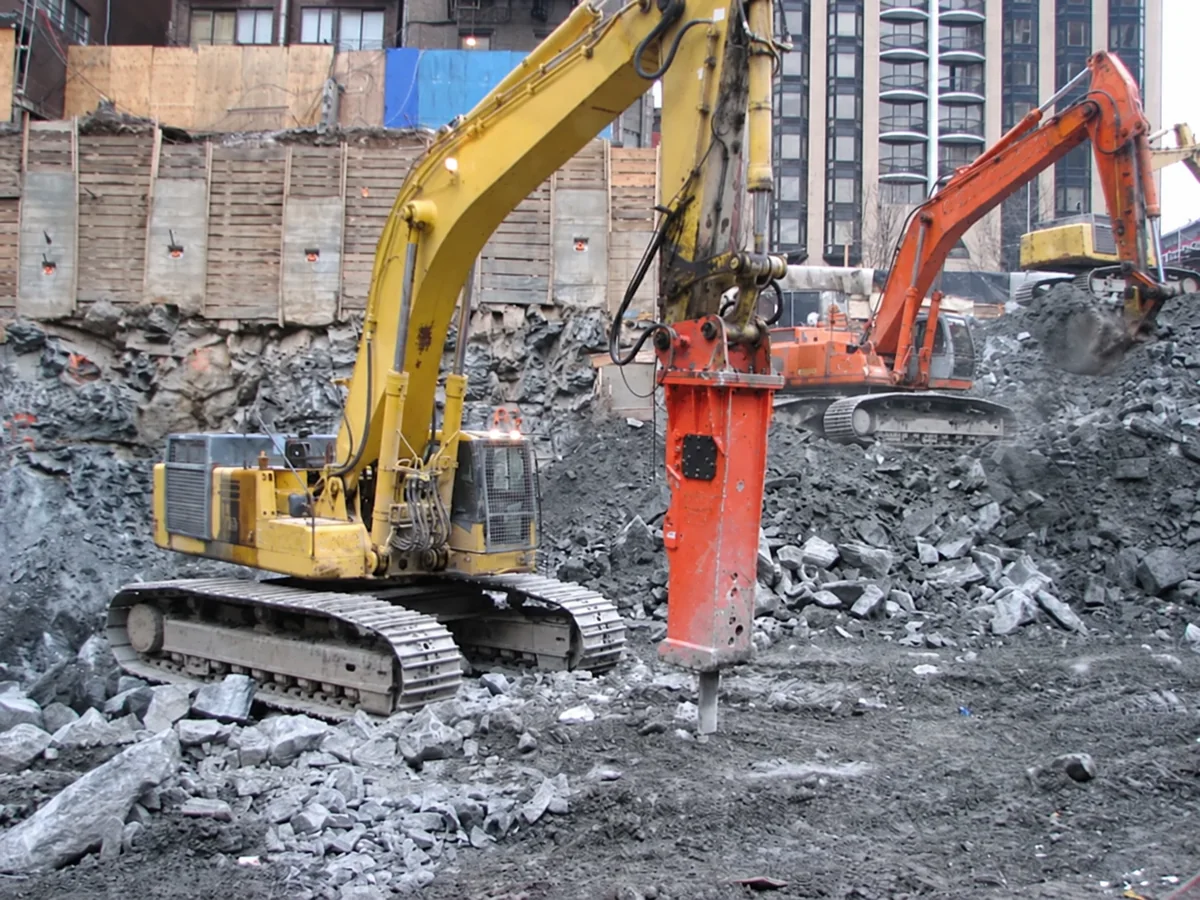
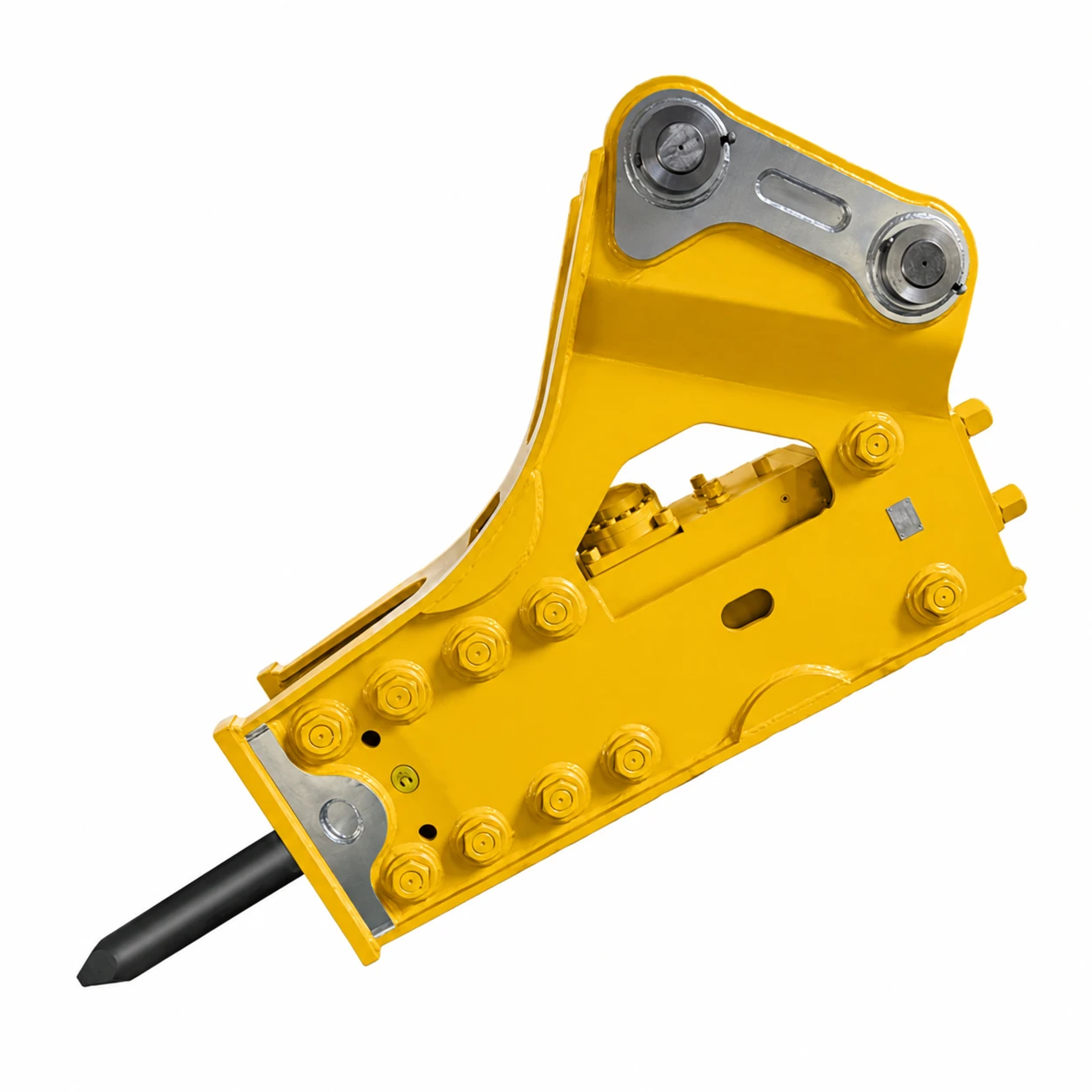
Compare hammer housing, working-tool access and the hydraulic requirements.
Side-type hydraulic breaker, Top-type hydraulic breaker, Box-type hydraulic breakerView matching product types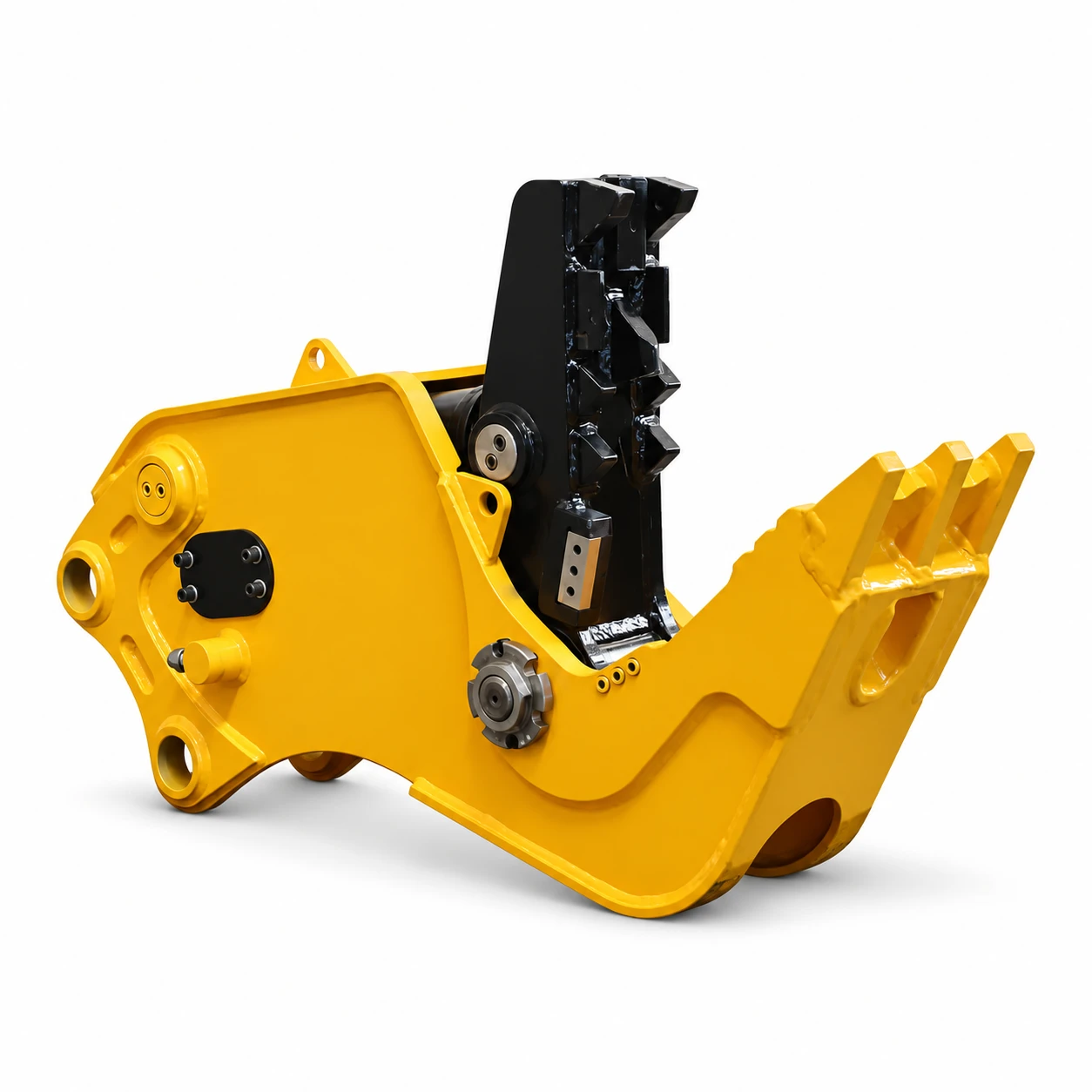
Compare fixed and rotating jaws for processing suitable concrete sections and debris.
Fixed pulverizer, Rotating pulverizer, Concrete cutter, Concrete busterView matching product types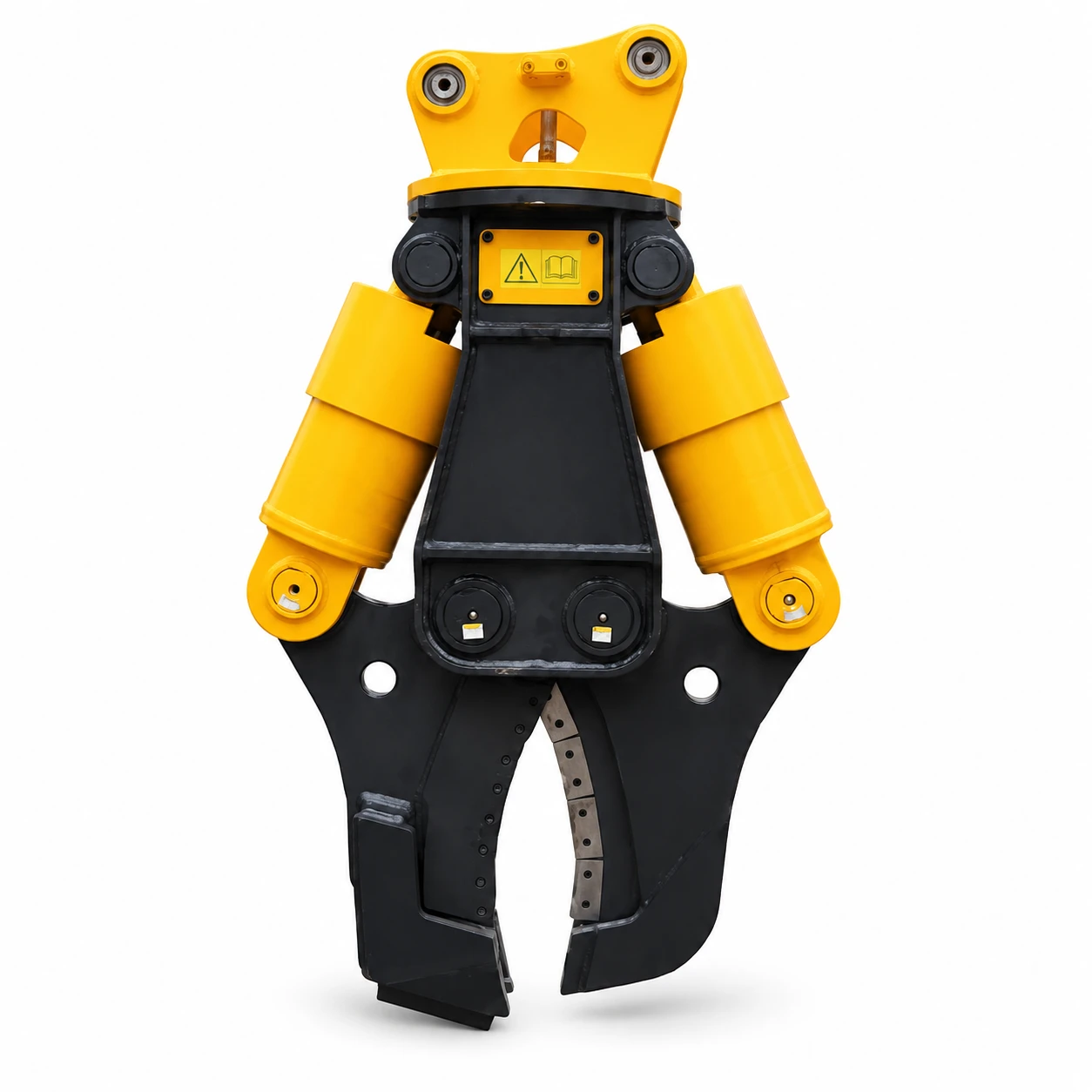
Select a steel-cutting jaw or the appropriate interchangeable processor jaw.
Hydraulic steel shear, Multi-purpose demolition processorView matching product types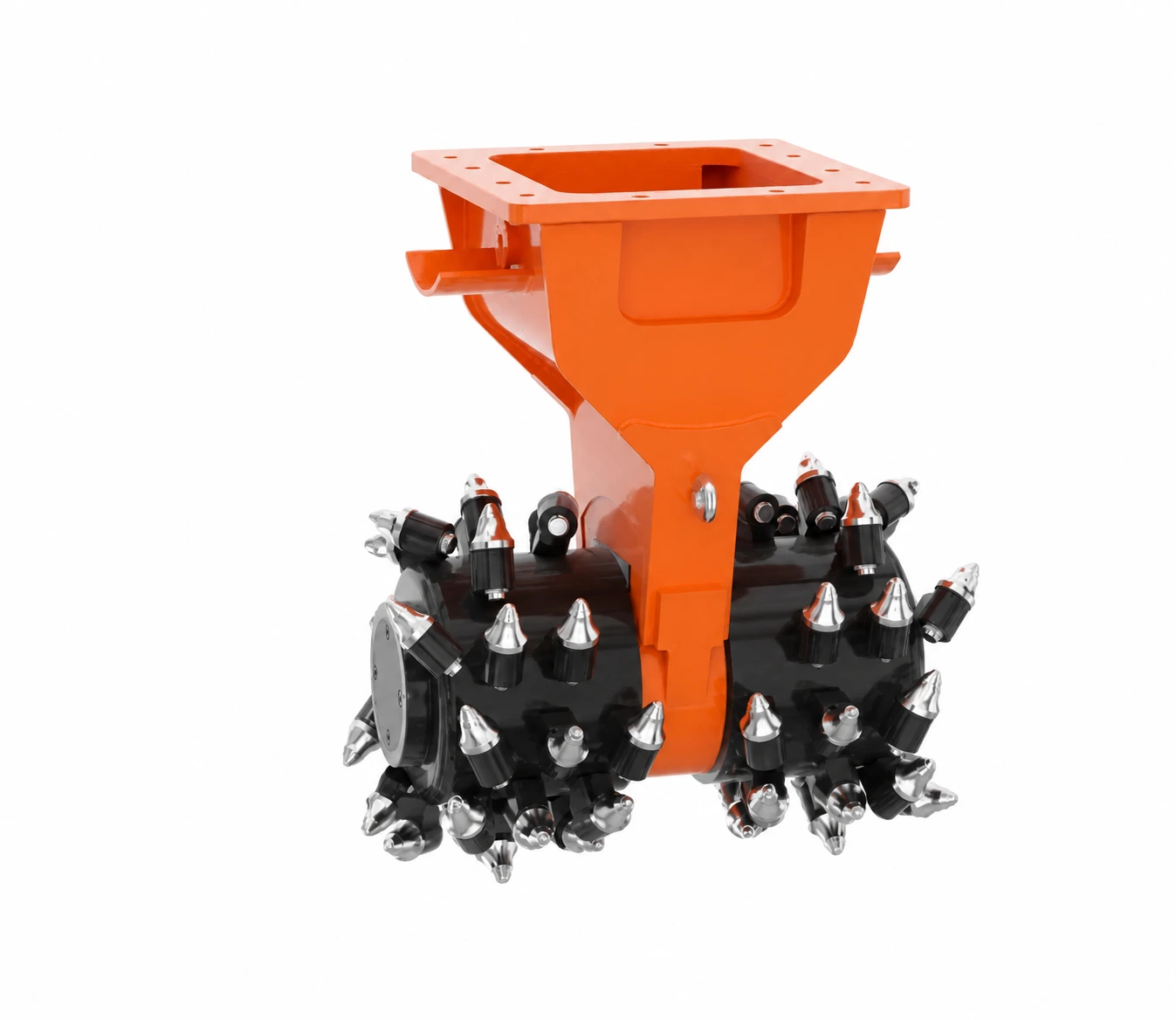
Use the correct drum or saw mechanism for the formation and required cut.
Drum cutter, Rock sawView matching product types| Product type | Purpose & applications | Key checks | Product information |
|---|---|---|---|
| Side-type hydraulic breaker | An open-frame hydraulic breaker with a side-mounted bracket for breaking rock and concrete. Check the mounting geometry and hydraulic requirements for your excavator. | Excavator weight, oil flow/pressure, return and working tool. | View product & specifications |
| Top-type hydraulic breaker | An open-frame hydraulic breaker with an upper mounting bracket for rock breaking, concrete removal and vertical work. Match the breaker to the carrier and hydraulic circuit. | Excavator weight, oil flow/pressure, return and working tool. | View product & specifications |
| Box-type hydraulic breaker | A hydraulic breaker with an enclosed housing for rock and concrete breaking. The box-style enclosure protects the breaker body; review local noise requirements and the required machine configuration. | Excavator weight, oil flow/pressure, return and working tool. | View product & specifications |
| Fixed pulverizer | A fixed-jaw hydraulic pulverizer for reducing concrete and separating reinforcing steel during demolition and recycling. Compare jaw opening, blade length and hydraulic requirements for the working material. | Jaw/cutting geometry, mounting, oil flow and pressure. | View product & specifications |
| Rotating pulverizer | A rotating hydraulic pulverizer for positioning the jaws around concrete sections, crushing concrete and separating reinforcing steel. Rotation allows the operator to adjust the jaw angle to the work. | Jaw/cutting geometry, mounting, oil flow and pressure. | View product & specifications |
| Hydraulic steel shear | A double-cylinder hydraulic shear for cutting steel sections, reinforcing bars and suitable metal structures during dismantling and scrap recovery. Compare jaw opening, blade length and cutting forces at the stated jaw positions. | Jaw/cutting geometry, mounting, oil flow and pressure. | View product & specifications |
| Multi-purpose demolition processor | A rotating, twin-cylinder demolition attachment with interchangeable jaw arrangements for concrete breaking, separation and cutting suitable metal sections. | Selected jaw set, opening, actuation/rotation circuits and machine lifting limits. | View product & specifications |
| Concrete cutter | A hydraulic demolition cutter for breaking reinforced concrete sections and cutting exposed reinforcing steel. Compare jaw dimensions and crushing forces at the tip and centre for the material and carrier. | Jaw/cutting geometry, mounting, oil flow and pressure. | View product & specifications |
| Concrete buster | A twin-cylinder hydraulic jaw attachment for breaking concrete during demolition and cutting suitable reinforcing steel with removable blades. | Jaw opening, blade length, hydraulic flow/pressure and mounting. | View product & specifications |
| Drum cutter | A hydraulically driven cutting attachment with replaceable picks for controlled milling, profiling and trenching in suitable rock, concrete and asphalt. Compare transverse and vertical cutting arrangements for the work area. | Jaw/cutting geometry, mounting, oil flow and pressure. | View product & specifications |
| Rock saw | A single-blade hydraulic rock saw for cutting rock and reinforced concrete. Select the blade for the material and match the drive to the excavator hydraulic supply. | Jaw/cutting geometry, mounting, oil flow and pressure. | View product & specifications |
Identify rock, concrete and the size of the sections to be broken.
Compare side, top and enclosed box arrangements for access and protection.
Choose the point or chisel for the material and the selected hammer.
Consider confined access, noise requirements and the planned duty cycle.
Distinguish concrete reduction, reinforcement separation and steel cutting.
Identify whether the tool will demolish an intact section or process debris.
Decide whether powered rotation is needed for the access and task.
Compare jaw opening and cutting geometry with the actual section.
Use the requirements for the actual working mechanism. Drilling drives, compaction tools, cutting tools and processing buckets do not share one hydraulic specification.
Side brackets offer a low mounting arrangement; top brackets suit upright positioning; box brackets enclose the body and use internal damping. Select for access, task and operating conditions.
No. The carrier must support the attachment and supply the specified flow, pressure and return arrangement. Chisel size and the material must also match.
An enclosed bracket and dampers reduce operating noise, but they do not eliminate impact noise. Check site requirements and the selected equipment documentation.
Choose the working mechanism for the material. A steel shear cuts steel; a pulveriser primarily reduces concrete and separates reinforcement.
No. Rotation is a positioning function. Compare access and working orientation, then check the actual tool’s hydraulic and structural requirements.
No. Check the mounting connection, lifting limits and the power or hydraulic supply specified for the selected tool.
Describe the material, required result and working dimensions. Include the machine model and the connection information listed above.
Send your machine make and model, the required product and working task, quantity and delivery destination.